
Table of Contents
- Key takeaways
- Why do ceiling hangers make sense?
- Best rooms for hanger installation
- Balcony installation tips and tricks
- Kitchen and utility area placement
- Ceiling type considerations before installation
- Professional installation vs DIY approach
- Maintenance tips after installation
- Wrapping it up
- Frequently asked questions
Key Takeaways
- A proper ceiling cloth hanger installation in Bangalore saves floor space and dries clothes faster with better airflow.
- Balconies, utility rooms, and kitchens are the most practical spots for a ceiling mounted cloth hanger installation in Bangalore.
- Ceiling type (RCC, false ceiling, or wooden) decides the anchors and hardware needed for a safe setup.
- Professional installation avoids ceiling damage and ensures your hanger holds weight safely for years.
Since you are living in a Bangalore apartment or an independent home, you are bound to have run out of space to dry clothes at some point, particularly during the monsoons when the sun has been hiding for days on end. That’s exactly why more and more homeowners are switching to a ceiling cloth hanger in Bangalore instead of relying on old-school stands that eat up floor space and never quite dry things properly.
However, the problem with installing one is that it is not as easy as simply drilling in any spot on your ceiling. The location where it is installed dictates its effectiveness, durability, and success or failure- as a daily convenience or a daily headache. This guide will help you to understand where and how to install the ceiling cloth hangers in Bangalore and make the best use of them.
Why do ceiling hangers make sense?
Let’s first look at the reasons that make this setup so beneficial for Bangalore homes and why it is so effective.
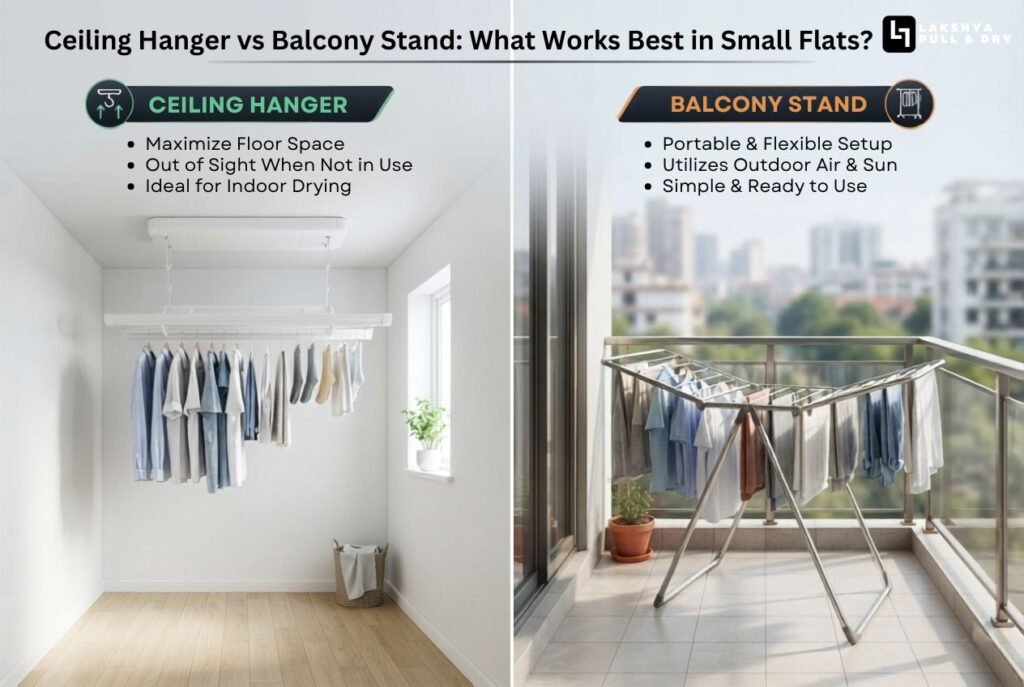
- Space Saving: No bulky stands that take up space on the balcony or utility area.
- Increased airflow: Clothes dry quicker hanging higher, away from moisture on the floor.
- Weather-friendly: Perfect for Bangalore’s unpredictable rain patterns
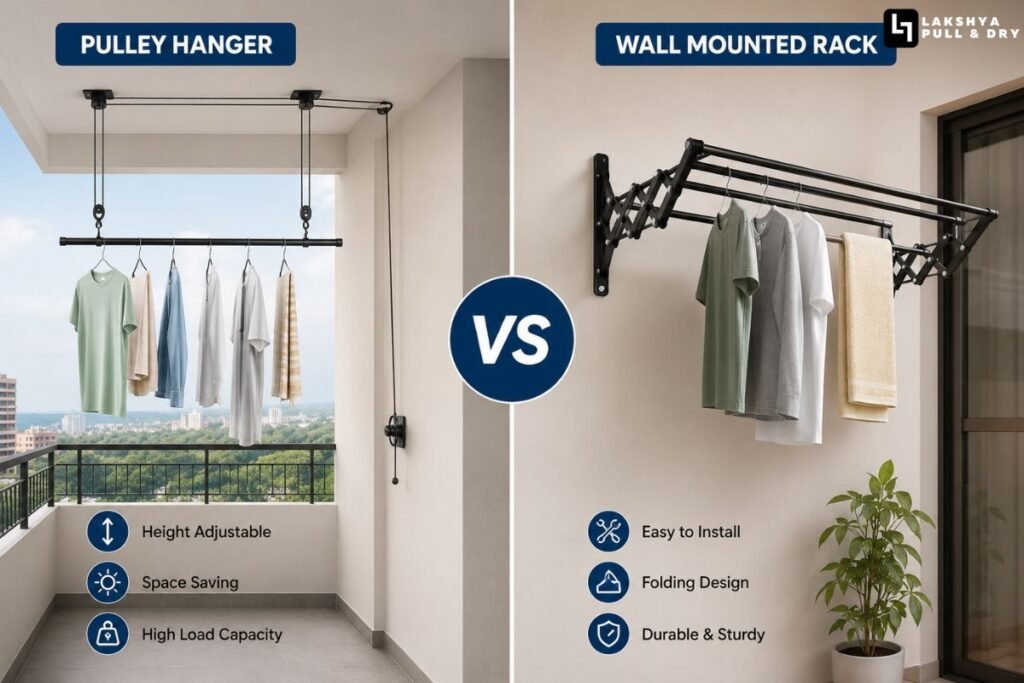
- Adjustable height: Pulley systems: Allows for adjustment to lower or raise the height of the hanger as necessary.
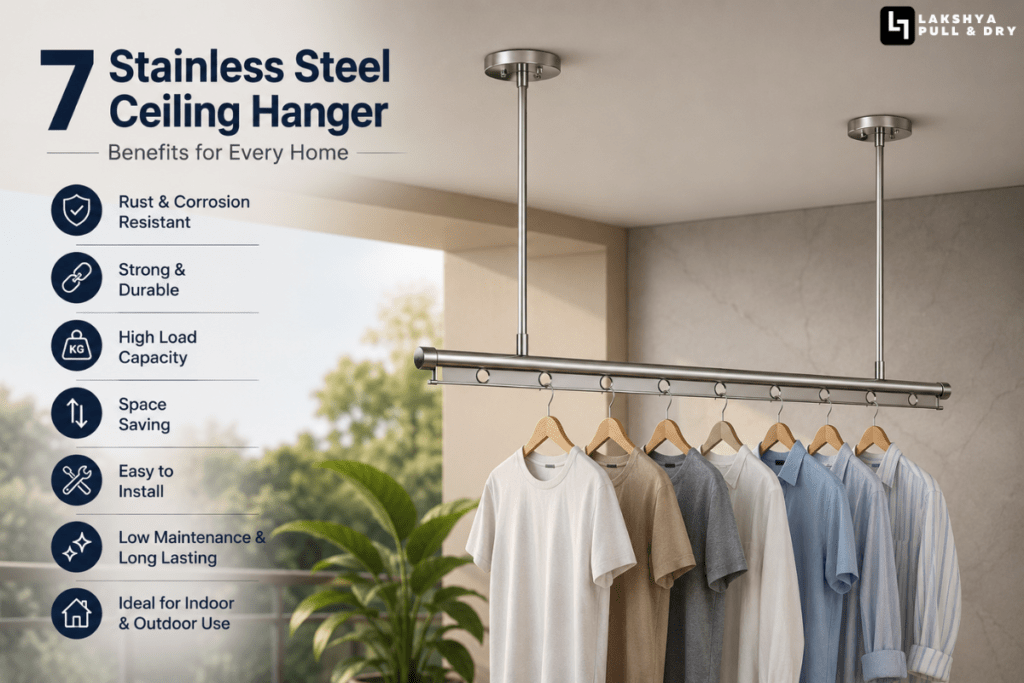
- Long-term durability: A ceiling-mounted cloth hanger installation in Bangalore can be very low maintenance and can last a lot of years without any hassles.
But when you realize how much you can gain from this, the obvious thing to ask is, where will this fit in your home?
Best rooms for hanger installation
Not all rooms will have a ceiling hanger. Let’s take a quick look at the most popular places to put them and their effectiveness.
| Location | Suitability | Why It Works |
| Balcony | Excellent | Natural sunlight and ventilation |
| Utility Room | Excellent | Dedicated drying space, no interference |
| Kitchen | Good | Useful for small loads, but watch for grease/smoke |
| Bedroom | Not Recommended | Moisture buildup can affect walls and furniture |
| Terrace | Excellent | Best airflow, ideal for larger households |
However, when choosing between two places, always go for ventilation and natural light; that’s what dries the hangers faster, not so much the hangers themselves.
Balcony installation tips and tricks
A balcony cloth drying hanger Bangalore is the best alternative to choose for most Bangalore homes. It’s functional, it receives sunlight, and it keeps wet clothes out of living areas.
Here are a few points to consider:
- Place the hanger at a convenient height so the rope for the pulley is not strained by reaching up to it.
- Ensure adequate distance between railing and outdoor dust or pollution; do not let clothes touch outdoor dust or pollution.
- When your balcony is covered, hang the hanger to allow some cross-breezes.
- Look for electric cables around before you drill.
- For balconies, which are exposed to more humidity and rain, use rust-resistant hardware.
Moreover, a well-planned balcony cloth drying hanger installation in Bangalore can honestly replace the need for a separate drying stand altogether- freeing up that corner for something more useful, like a small seating area or plants.
Kitchen and utility area placement
Bangalore apartments are increasingly featuring utility rooms, and it is a wonderful place for a ceiling cloth hanger installation in Bangalore. This space is already intended for washing machines and cleaning products, so it makes sense to put a hanger there- it will keep the drying chore away from the living areas entirely.
If you are thinking of the kitchen, some tips:
- Avoid placing the hanger near the stove and exhaust vent.
- Do not install over cooking areas (steam and grease may have a detrimental effect on the fabric).
- If possible, select a corner near a window, where there is more air movement.
In fact, many households like to have two hangers: one in the laundry room for heavier loads or washable items and one on the balcony for heavier loads or bedsheets.
Ceiling type considerations before installation
This is something that people tend to overlook, but it is crucial for safety and durability. There are different types of ceiling:
- RCC (concrete) ceilings: Mostly used in Bangalore homes, they will need heavy-duty anchor bolts for installation.
- For a false ceiling- Extra reinforcement is required, as the weight of the hanger should not be supported by the false ceiling panel alone but should be supported by the actual slab above.
- Wooden ceilings: Less common, but require specific screws designed for wood to prevent loosening over time.
One of the most common mistakes is getting this one wrong, resulting in hangers that go loose or, worse, fall. Experienced teams like Lakshya Pull & Dry are the ones who consider your ceiling type before suggesting you the correct fittings, as this is where working with an experienced team really pays off!
Professional installation vs DIY approach
With all the tutorials out there, it is easy to make a ceiling clothes hanger on your own. However, there are good reasons for professional installation most of the time:
| Factor | DIY Installation | Professional Installation |
| Safety | Risk of incorrect drilling | Proper load testing done |
| Ceiling damage | Higher chance of cracks | Minimized with right tools |
| Time | Trial and error | Usually done in under an hour |
| Warranty | None | Often included |
| Long-term durability | Uncertain | Higher, with correct anchoring |
When using a hanger for your clothes, be sure to check the weight capacity and load it with a lighter load first before hanging a full load of laundry.
Maintenance tips after installation
After the installation of the ceiling cloth hanger Bangalore, a few tips for easy maintenance:
- Clean the rods periodically to remove rust, particularly around balconies, every couple of months.
- Regularly inspect the pulley mechanism to ensure it is running smoothly.
- Replace or tighten any loose screws or brackets every 6 months.
- Do not exceed the weight limit.
- If the pulley becomes stiff, moving parts should be lubricated.
Simple maintenance such as this means that your hanger will be maintained and able to operate for years without any repairs or replacement.
Wrapping it up
When it comes to hanging laundry on the ceiling, not only is the location the most convenient, it’s also the fastest, safest, and least stressful way to hang laundry each day. It can be your balcony, your utility room, or your kitchen; the point is to coordinate with the type of ceiling and household needs.
If you’re in Bangalore and considering doing it right, it is essential to get a professional inspection beforehand. Lakshya Pull & Dry can assist you in making the right choice and take care of the technical aspects from ceiling type to hardware without having to put your fingers in your hair and make an educated guess. Say goodbye to cumbersome drying stands! Call a reputable local ceiling hanger installer and have it installed properly.
Frequently asked questions
Balconies and utility areas are the most suitable for drying laundry because they provide the necessary ventilation and sunlight while kitchens can also be used for smaller laundry loads.
Yes, but it has to be fixed directly to the concrete beam supporting the false ceiling.
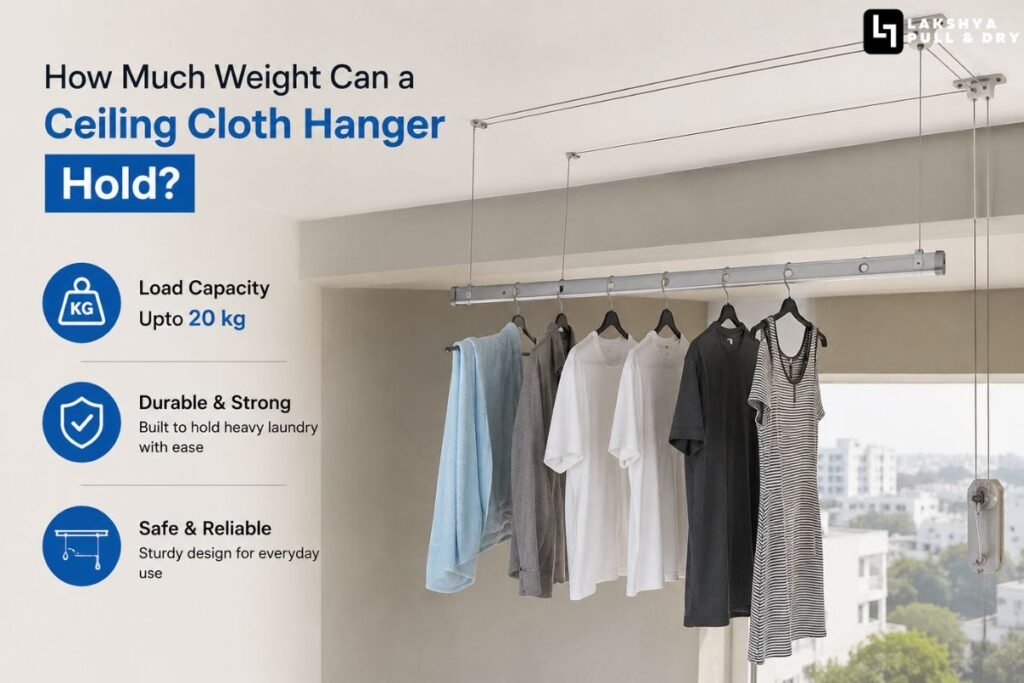
Most ceiling hangers can hold 15-20 kg although it can differ from manufacturer to manufacturer, so check with the manufacturer before purchasing.
Yes, many models can fit in small balcony spaces while still providing efficient drying space without obstructing movement.
Professional installation is recommended for safety, proper anchoring, and avoiding ceiling damage, though simple models can sometimes be self-installed carefully.
Professional installation typically takes 30-60 minutes, depending on ceiling type, hardware complexity, and whether additional reinforcement is required beforehand.
Not if done correctly with proper anchors and tools; incorrect DIY attempts, however, can cause cracks or weakened ceiling sections.
Regularly check screws, lubricate pulleys, avoid overloading, and wipe down rods to prevent rust, especially in humid balcony environments.